
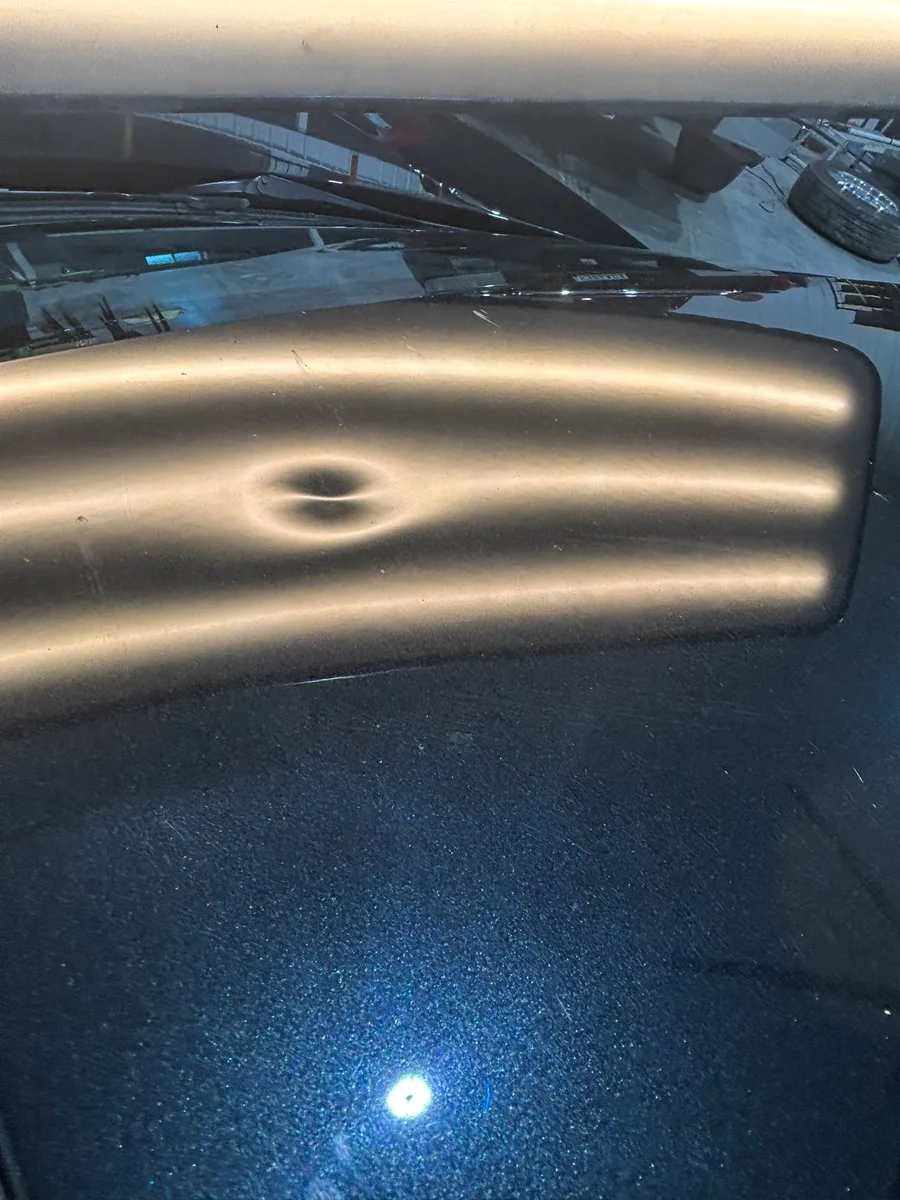
This is the #1 question every first-time hail customer asks us. And it's the question most insurance agents will answer with something vague like "it depends on your policy" — which technically isn't wrong, but also isn't helpful. Let's break down what actually happens to your rates when you file a hail claim, why, and when the edge cases kick in.
The short answer: in most cases, no
Hail damage falls under comprehensive coverage, not collision. This is the critical distinction. Comprehensive claims are classified as "act of God" — meaning the damage wasn't caused by driver behavior. Your rates typically don't go up when you file one.
Compare this to a collision claim. That's where you rear-ended someone or slid on ice and hit a guardrail. Those are at-fault claims and they almost always raise premiums. Hail is different because nobody did anything wrong. The storm happened.
Why comprehensive claims don't raise rates (usually)
Insurance pricing is based on risk prediction. Actuaries look at your claim history as evidence of future risk. A driver who filed a collision claim is statistically more likely to file another one, so rates go up to reflect that risk. But filing a hail claim doesn't predict future hail claims — unless you live in a hail-heavy area, which the insurer already knows about from your ZIP code, not your claim history.
This is why comprehensive claims for hail, wind, theft, and falling trees generally don't trigger rate increases. The insurer doesn't view you as a higher risk going forward just because a storm happened.
The "act of God" classification — and why it protects you
Hail is legally classified as an act of God. That's not a figure of speech — it's a specific insurance term meaning the event was natural, unforeseeable, and completely outside human control. No driver behavior caused it. No negligence contributed to it. Your car was parked in your driveway and the sky dropped ice on it. That classification is what keeps comprehensive claims in a separate category from at-fault claims when insurers calculate your renewal premium.
Every major carrier treats act-of-God claims differently than behavioral claims. Their own internal risk models separate the two. When an adjuster processes your hail claim, it's coded as a comprehensive loss — not a collision loss, not a liability event. That coding matters at renewal time because the algorithm that calculates your next premium weighs comprehensive claims far less than collision claims, and in most cases weighs them at zero.
State-specific protections in Missouri and Kansas
Missouri law prohibits insurers from raising rates solely because of a comprehensive claim. Section 379.318 RSMo specifically addresses weather-related claims. If your carrier raises your premium after a single hail claim and you can demonstrate no other risk factors changed, you have grounds to file a complaint with the Missouri Department of Commerce and Insurance.
Kansas has similar protections under K.S.A. 40-955. The Kansas Insurance Department regulates rate-setting practices, and carriers must justify premium increases with actuarial data — not individual comprehensive claims. In practice, this means a single hail claim on an otherwise clean record should not affect your renewal rate in either state. If it does, contact your state insurance department.
The edge cases nobody tells you about
There are situations where a hail claim can affect your rates or policy renewal. They're not common, but they exist:
Multiple claims in a short window
Multiple claims in a short window change the math. If you've filed several claims of any type in the past 3 years, adding a hail claim to that pile can trigger a premium review or non-renewal. Insurers look at overall claim frequency, not just claim type. If you've had one hail claim in 5 years, you're fine. If you've had three claims of any kind in 18 months, that's a different conversation.
Living in a hail-heavy ZIP code
Rates in hail-prone metros already factor in the risk. Kansas City, Tulsa, Denver, and Dallas — you're paying more for comprehensive coverage than someone in, say, Seattle. But if your specific area has had multiple major hail events in consecutive years, insurers sometimes raise base rates for everyone in that ZIP code at renewal time. That's not your claim causing it — it's the underwriter repricing the neighborhood.
Your carrier's specific policies
A few carriers have stricter policies around any claim. Particularly regional carriers and some programs inside larger carriers. If you have a low-cost non-standard policy, a claim may have more impact than with a mainstream carrier. Your best move: call your agent directly and ask "will this specific hail claim affect my rates at next renewal?" They have to answer honestly.
What "rate protection" actually means
Some carriers advertise "accident forgiveness" or "first claim protection." These are usually targeted at at-fault collision claims and may or may not apply to comprehensive. Read the fine print. If you're a State Farm customer, their Drive Safe & Save program handles comprehensive differently than a base policy. Progressive's Snapshot has its own logic. USAA customers get some of the strongest rate protection in the industry for comprehensive claims.
What you can actually do
Before filing, call your agent. Not the 1-800 claims line — your actual agent, if you have one. Ask three questions: will this claim affect my renewal, is this the kind of claim that's covered without rate impact, and is there anything about my specific policy I should know before I file. Most agents will give you a straight answer if you ask.
If you're still uncertain, run the math. Use our Should I File tool to compare deductible vs. repair cost. Sometimes — when the damage is light and the deductible is high — paying out of pocket is genuinely the better play. We'd rather tell you that than watch you file a claim you'll regret.
What happens if you don't file — the hidden cost of skipping the claim
Unrepaired hail damage gets worse over time, not better. Those small dents compromise the clearcoat. Kansas City's temperature swings — 100-degree summers, sub-zero winter nights — cause the metal to expand and contract around each impact point. Moisture works into micro-cracks in the clearcoat that were invisible at first. Within 12–18 months, you can start seeing rust spots and paint flaking where the hail hit hardest.
The resale hit is immediate even if the rust isn't. A vehicle with visible hail damage sells for 10–30% less than the same vehicle without it, depending on severity. On a $35,000 car, that's $3,500–$10,500 in lost value — far more than most deductibles. You're essentially paying to not use the coverage you're already paying for.
How filing actually works — it's simpler than you think
The entire process takes one phone call and about 15 minutes. You call your carrier's claims line, tell them your vehicle sustained hail damage, give them the date of the storm and where the car was parked, and they assign a claim number. That's it. An adjuster will inspect the vehicle (either in person or through photos), write an initial estimate, and issue payment minus your deductible. If the initial estimate is too low — and it usually is — your shop files a supplement with LED line-board documentation showing the full extent of damage, and the insurer typically approves the additional amount within 1–2 business days.
What Bryan tells customers who are on the fence
After 23 years of hail work in Kansas City, Bryan has had this conversation thousands of times. His advice is straightforward: if you have comprehensive coverage and your damage exceeds your deductible, file the claim. You're using the product you've been paying for. The storm wasn't your fault. The claim is coded as an act of God. In the vast majority of cases, your rates stay exactly where they are.
The one exception Bryan flags: if you've already filed two or more claims of any type in the past 18 months, it's worth calling your agent first to ask about claim frequency thresholds. Beyond that specific scenario, the math almost always favors filing. You paid for the coverage. The storm happened. Get your car fixed.
The bigger point
Insurance companies are not incentivized to make you use your coverage. They'd prefer you pay premiums forever and never file a claim. That's why the default answer to "will my rates go up?" is always vague — because clarity would lead to more claims. You're paying for comprehensive coverage specifically so you can use it when hail happens. Use it.
When you're ready, we coordinate the repair. Use the Claim Wizard and we'll work with your insurer from there. If you want to dig deeper, our full breakdown on rate impact goes into each carrier's specific behavior.