How long does hail repair take?
Two numbers matter, and confusing them is how people end up frustrated. Shop time — how long your vehicle sits in our bay — is 1 to 3 days for most hail. The full claim timeline — storm morning to keys in your hand — runs 2 to 4 weeks. The gap between those numbers is almost entirely insurance process, not repair process.
23 years and 5,000+ vehicles · repaired by hand at our Olathe shop · lifetime warranty in writing.
Here is the honest answer after 23 years of this work. Shop time for most hail repairs is 1 to 3 days. The full claim timeline, from the morning after the storm to keys in your hand, runs 2 to 4 weeks. The gap is almost all insurance — getting the estimate, filing the supplement, waiting on approval.
Knowing where the time goes helps you plan, and it helps you avoid the delays that turn a three-week claim into a six-week ordeal.
Key takeaways
- Shop time runs a few hours to about eight days, set by dent count and panel complexity — 1 to 3 days for most hail.
- The full claim timeline is 2 to 4 weeks, and roughly two-thirds of that is insurance process, not repair.
- Supplement approval is the single biggest variable — a clean, line-board-documented estimate clears in one to two business days.
- Aluminum adds 30 to 50% to the shop time for the same damage pattern.
- Filing early is the one lever you control — every day you wait adds a day, because the adjuster and shop queues grow at once.
How long does the repair itself take?
Shop time runs from a few hours to about eight days, and severity decides it. Light damage is often same-day. Severe full-vehicle damage takes the better part of a week. Everything in between lands at 1 to 3 days.
- Light damage — 50 to 100 dents, dime-to-nickel size, three to five panels: 3 to 6 hours, often a same-day turnaround. One technician, no major remove-and-install work beyond a trim piece or two.
- Moderate damage — 100 to 300 dents, nickel-to-quarter size, six to ten panels: 1 to 3 shop days. Two technicians working different panels in parallel, with headliner removal typical for the roof. This is the most common level we see at the Olathe shop — roughly half of every hail vehicle that comes through the doors.
- Severe damage — 300+ dents, quarter-and-larger, every panel: 3 to 7 shop days. Full team, extensive trim work, sometimes partial interior disassembly. These are the cars that look rough in the driveway and come back looking like the storm never happened. The severe hail repair page goes deeper.
- Full aluminum vehicle — F-150, Tesla, Rivian, Audi: add 30 to 50% to any tier above. Aluminum needs heat-assisted work and a more deliberate hand. A moderate-damage F-150 that would take two days on a steel sedan runs three to four. The aluminum repair page has the full timeline.

What does each severity level actually look like in the bay?
Light damage is the half-day repair. A vehicle with 50 to 100 small dents across a few panels — typically the hood, roof, and maybe a fender — gets inspected, repaired, and returned in a single business day. The technician removes minimal trim, works the dents with precision rods, blends the finish under the line boards, and reassembles. Cost lands around $1,500 to $3,500; the cost guide breaks it down.
For light damage, the insurance timeline is basically the whole timeline. The repair is so fast that the only bottleneck is the claims process — the initial estimate, the supplement, the wait for approval. File your First Notice of Loss promptly and let a carrier that moves quickly do its part, and light damage can be a ten-day, start-to-finish experience.
Moderate damage is the 1-to-3-day repair, and it is where most Kansas City storm damage lands. Day one is usually the full remove-and-install phase — headliner, door panels, fender liners — followed by initial work on the largest panels. Day two carries the remaining panels and starts the blend finishing. Day three, if it is needed, is final blend work, reassembly, and a quality-control inspection.
The 1-to-3-day range turns on dent density and which panels are involved. A sedan with 200 dents concentrated on the hood and roof — large, accessible panels — finishes faster than an SUV with the same 200 dents spread across ten panels, including quarter panels and rockers that take more work to reach.
Severe damage is the 3-to-7-day repair, where every panel is affected and dent sizes reach quarter, half-dollar, and sometimes golf-ball territory. These vehicles get full-team attention, extensive remove-and-install work, and sometimes a second round of supplement once hidden damage surfaces during disassembly. Each panel is worked, inspected, and signed off before the next one starts.
Severe repairs are also where we save vehicles from a total-loss declaration. Missouri's total-loss threshold sits at 80% of actual cash value; Kansas at 75%. A car with $12,000 in estimated damage on a $20,000 value is getting close. Bring the repair in under the line with efficient paintless dent repair and the vehicle gets saved instead of totaled. That takes the full 3 to 7 days, but it keeps a car the owner wants. The total-loss guide covers the math.
So why does the whole thing take 2 to 4 weeks?
Shop time is maybe a third of the total. The rest is insurance process. Here is roughly how the days stack up on a typical claim:
- Days 0–2You file the First Notice of Loss, get a claim number, and the insurer schedules its initial inspection.
- Days 3–7That inspection happens — adjuster visit, catastrophe site, or photo estimate — and you receive the first estimate.
- Days 5–10You bring the vehicle to our Olathe shop for a professional re-inspection under LED line boards.
- Days 7–14The supplement is submitted, reviewed, and approved — usually one to two business days, sometimes two rounds.
- Days 10–17Pickup is scheduled and the vehicle arrives at the shop.
- Days 11–24The repair is performed — 1 to 3 days for most hail.
- Day 12–25Delivery back. Done.
In practice, most straightforward claims run two to three weeks total. Severe damage or a complicated supplement pushes it to four or five. An insurance-company backlog during peak hail season can add another week on top.
What actually slows things down?
Three things stretch a timeline, and supplement back-and-forth tops the list.
- Supplement back-and-forth. Insurers occasionally push back on specific line items, and each round adds three to five days. We write tight supplements with photo documentation to keep those rounds to a minimum.
- Adjuster availability. During a major storm event, an in-person adjuster inspection can take five to ten days to schedule. A photo-based estimate skips that wait, but it tends to come back even lower than an in-person look — which means a larger supplement and more back-and-forth later.
- Your own availability for pickup and delivery. If you can only hand over the keys on weekends, it adds a little friction. Our pickup crew runs Monday through Saturday, so weekend-only schedules are workable — they just stretch the calendar slightly.
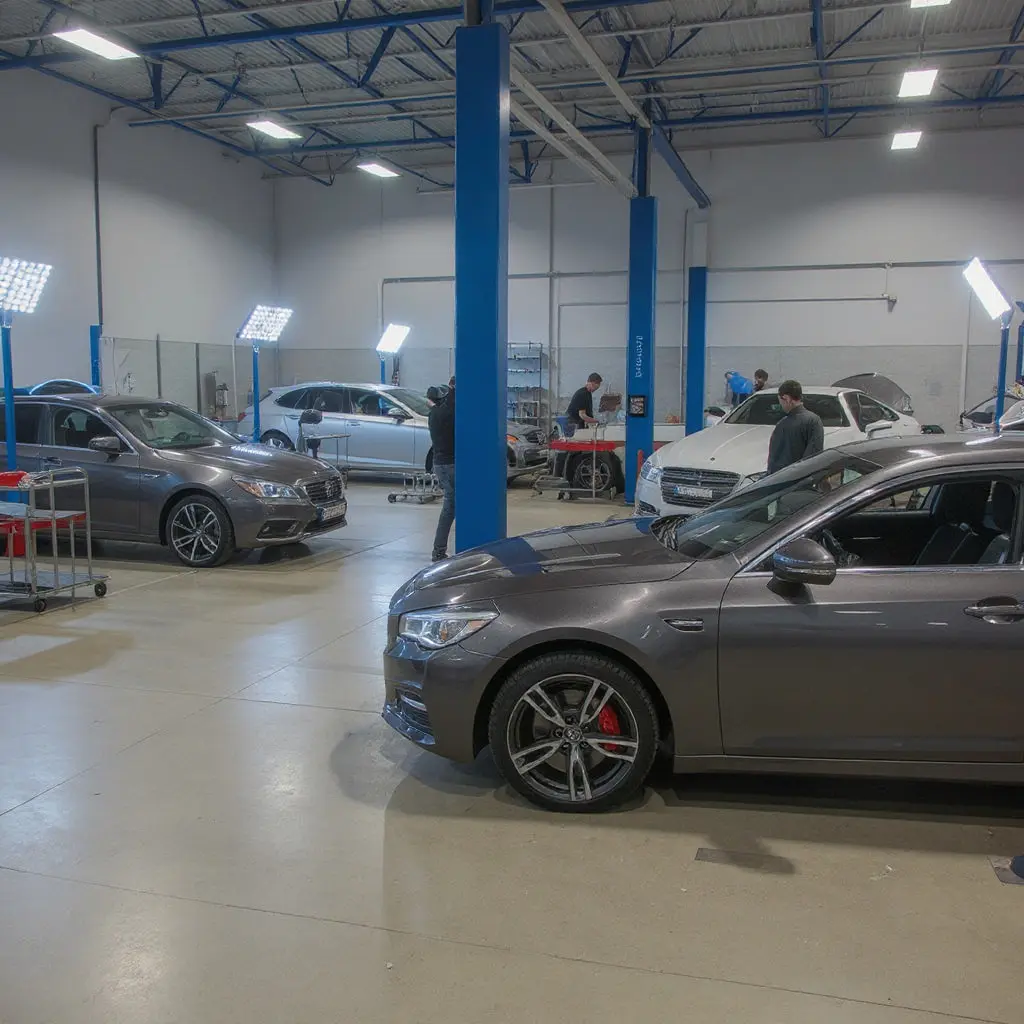
Where do most of the delays actually live?
Supplement approval is the single biggest variable in your timeline. The insurer issues an initial estimate from its inspection, and that estimate is almost always 20 to 40% below the real repair cost — because adjusters inspect in natural light, not under LED line boards. We submit a supplement, our line-board-documented estimate showing the additional damage, and the carrier reviews it.
A typical supplement approval takes one to two business days. The carrier's reviewer compares our documentation against their guidelines, and when the photos and counts support the additional charges, they approve. A clean supplement with panel-by-panel photos under the line boards clears faster than a vague one.
Sometimes a second round is needed. That happens when damage discovered during the repair — trim removal reveals dents hidden behind moldings — exceeds the first supplement. Each round adds another day or two. On severely damaged vehicles, two rounds are common and the carrier expects them.
The shops that struggle with supplement timelines are the ones that submit incomplete documentation. Over 23 years we have refined the process to keep rounds down: every dent photographed under the line board, every panel on a body diagram, every line item tied to its CCC ONE matrix code. The payoff is faster approvals and fewer surprises. The supplement guide covers the whole process.
What happens to the timeline after a big storm?
When a major storm damages a large share of the metro at once, the whole repair pipeline backs up. Every paintless dent repair shop, body shop, and insurance adjuster gets busy at the same moment, and the usual two-to-three-week timeline can stretch to four to six. Not because the repair takes longer — because the queue to get into a shop is longer.
During a surge, three things happen together. Adjuster availability drops, since they are working through far more claims than usual. Shop schedules fill weeks out. And traveling techs flood the market — out-of-state operators who follow storms, set up in a hotel parking lot, and leave town when the work dries up.
A permanent local shop handles a surge differently than a traveling operation. We are at 2109 E Kansas City Rd, #22 in Olathe year-round. When a big storm hits, we add capacity by extending hours and bringing in paintless dent repair techs we have worked with for years — not random subcontractors. The schedule fills fast, but we quote realistic timelines instead of overbooking. If your repair is three weeks out, we say three weeks, not "we'll get you in this week" followed by silence.
The best move during a surge is to act early. Use the claim walkthrough right away. The customers who file the morning after the storm and get on our schedule inside the first 48 hours are repaired and done while the ones who waited a week are still trying to land an adjuster appointment.
What about a rental while my car is in the shop?
Most comprehensive policies include rental reimbursement, usually $30 to $50 a day with a 30-day cap. The coverage kicks in while your vehicle is in the shop for a covered repair, and we provide the documentation your carrier needs to turn it on — the repair timeline estimate and the shop confirmation.
The detail most people miss: reimbursement usually covers the days the car is physically in the shop, not the waiting period before the repair starts. Drop off Monday, pick up Wednesday, and you get two or three days of rental coverage — not the full three weeks of the claim. Some carriers are more generous during a declared catastrophe, so check your policy. The rental car coverage guide has the full breakdown.
We line up rental timing with the repair schedule to keep the gaps small. When we know your vehicle comes in Tuesday, we tell you Monday afternoon so you can grab a rental that evening and have a ride ready. When the repair is done, we call before close so you can return it the same day. Tight coordination saves rental days and keeps your costs down.
What does Bryan tell customers about realistic timelines?
The same thing every time: the repair is the fast part, the insurance process is the slow part. Let us coordinate the repair with your insurer and you will have your vehicle back as quickly as the system allows. That has held true across 23 years and 5,000+ vehicles.
The most frustrated customers are the ones who spent two or three weeks trying to handle the insurance themselves first. They negotiated with the adjuster, disputed the estimate, and went back and forth on the supplement without the documentation to back their position. By the time they call us, they are three weeks in with no repair scheduled. Had they called on day one, the car would already be back.
The other pattern shows up regularly: customers who picked a traveling tech because "they could start tomorrow," then needed the work redone. The traveling operation rushed it, left visible dents under the line boards, and moved on to the next storm. Now there is a second repair and a second round of paperwork. What looked faster on day one turned into a six-week ordeal.
Bryan's honest recommendation: file your claim the morning after the storm, then call us or use the claim walkthrough the same day. You make the call to your insurer — it is your claim, and we never file it for you — and from there we coordinate the supplement, the adjuster communication, and the scheduling. Your active involvement runs about 15 minutes across the whole process, and the vehicle is back in two to three weeks.
How do I keep my own wait as short as possible?
Three things, in order of impact. First, file the First Notice of Loss immediately — the morning after the storm, not "when the time is right." Starting the clock early puts you ahead of the adjuster backlog during peak season.
Second, submit wide and close-up photos in the carrier's app. Many insurers now generate an estimate straight from those photos without scheduling a separate inspection, which can cut three to seven days from the timeline.
Third, let the shop coordinate the repair with your insurer. You do not need to sit on every call or chase the supplement yourself. An experienced shop moves faster than a customer because we know the process — and a permanent local shop has the edge over a parking-lot operation, with established relationships with local adjusters and predictable capacity. The traveling tech vs. local shop comparison spells out the difference.
The bottom line: 2 to 4 weeks from storm morning to keys back, with 1 to 7 shop days inside that window. Total active time on your part is under 15 minutes if you use a shop that handles the coordination. Every day you wait after a storm adds a day to the timeline, because the insurance, adjuster, and shop queues all grow at once. Call us at (816) 451-1455 or start online, and we will give you a realistic timeline within 24 hours.
Common questions about hail repair timing
Can you expedite my repair?
The actual repair window is fixed by dent count and panel complexity — that part we cannot rush without cutting corners. What we can move faster: supplement approval, by submitting tight, well-documented CCC ONE estimates; pickup and delivery scheduling; and slotting your vehicle ahead of non-urgent work. Call us at (816) 451-1455 if you have a hard deadline and we will tell you straight what is possible.
Why did my neighbor's repair take six weeks?
Usually one of two reasons: a body shop, or a stalled supplement. Body-shop hail work runs two to four weeks minimum because it involves repainting and parts. Straight paintless dent repair is fast — the delays come from supplement back-and-forth or an insurance approval that sits. Pick a shop that updates you every 48 hours and you sidestep most of the silence that turns a three-week claim into a six-week one.
How long does aluminum hail repair take?
Roughly 30 to 50% longer than steel for the same damage pattern. Aluminum needs heat-assisted paintless dent repair and more patient, deliberate work. Moderate damage that runs a day and a half on a steel sedan runs two to four days on an F-150. The aluminum repair page has the full breakdown.
Will my car be safe to drive while I wait?
Yes — unless you have broken glass or structural damage, hail dents are cosmetic. They do not affect your vehicle's safety, driveability, or mechanical function, so drive it normally until your appointment. The only thing worth hurrying is filing the claim, so the insurance process starts moving while the car still gets you to work.
What if a second storm hits before my car is repaired?
File a second claim. Each storm is a separate insurable event with its own claim number and deductible. If new damage lands before we repair the first storm's damage, we document both and work with both adjusters. It happens more often than you would think during an active hail season here.
Do you offer loaners or help with rentals?
We do not keep a loaner fleet, but we help you set up rental coverage through your carrier. Most comprehensive policies include rental reimbursement, often $30 to $50 a day, and we provide the documentation your insurer needs to approve it for the length of the repair. The rental car guide walks through how that coverage works.
The sooner you file, the sooner you drive it back
Use the free claim walkthrough and we will run the timeline for you, or call and ask for Bryan Wilson. You file the claim — we never file it for you — and once it is approved, the repair is ours.