Key takeaways
- Paintless dent repair leaves no CARFAX or AutoCheck record — no panel replacement, no paint, no structural work to report.
- Body-shop repair posts a body-repair flag permanently, and dealers discount it 5 to 15 percent at trade-in.
- A hail claim lands in CLUE, not CARFAX — and dealers and buyers cannot pull CLUE. CLUE records drop off after seven years.
- Claim reporting and repair reporting are two separate systems — you can file a claim and still keep a clean CARFAX by choosing paintless dent repair.
- A paint-depth gauge reads factory thickness after paintless dent repair, because the original finish was never touched.
How does CARFAX get a body-repair record in the first place?
CARFAX pulls repair data from a network of contractual reporting partners. When a body shop replaces a panel, repaints a panel, or does structural work, its CARFAX licensing agreement requires it to report that work — and the record stays searchable on every CARFAX report ever pulled on your VIN. The partners feeding the system include:
- Body shops and collision centers. They report panel replacements, repaints, and structural repairs under their licensing agreements.
- Repair facilities and state DMVs. When a title is branded — salvage, rebuilt, flood — the DMV reports that too. Severe hail that triggers a total-loss declaration can produce a salvage title, a permanent CARFAX entry that cannot be removed even after the vehicle is rebuilt and re-titled. It is why understanding the total-loss math is worth your time.
- Insurance claim databases. They feed reported work into the system alongside the shops.
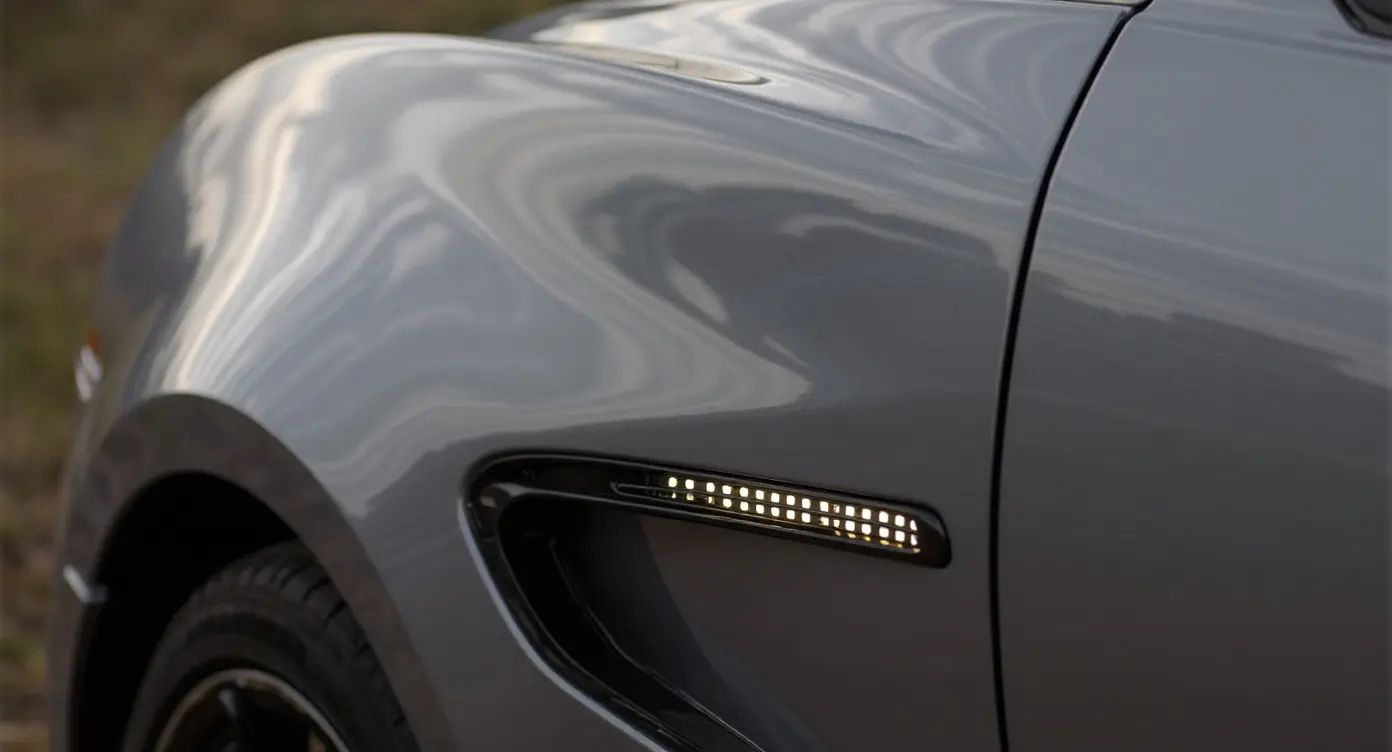
The reporting obligation tracks the type of work, not the cause of damage. A collision, a hailstorm, or a parking-lot ding all report the same way: panels replaced, panels repainted, structural work done. CARFAX draws no line between "cosmetic hail repair" and "rear-end collision repair." A body-repair flag is a body-repair flag.
Paintless dent repair trips none of those reporting categories. There is no panel replacement, no paint work, and no structural repair. The vehicle comes through the shop, the dents get pushed back to factory contour, and it leaves with no CARFAX-reportable event attached to it.
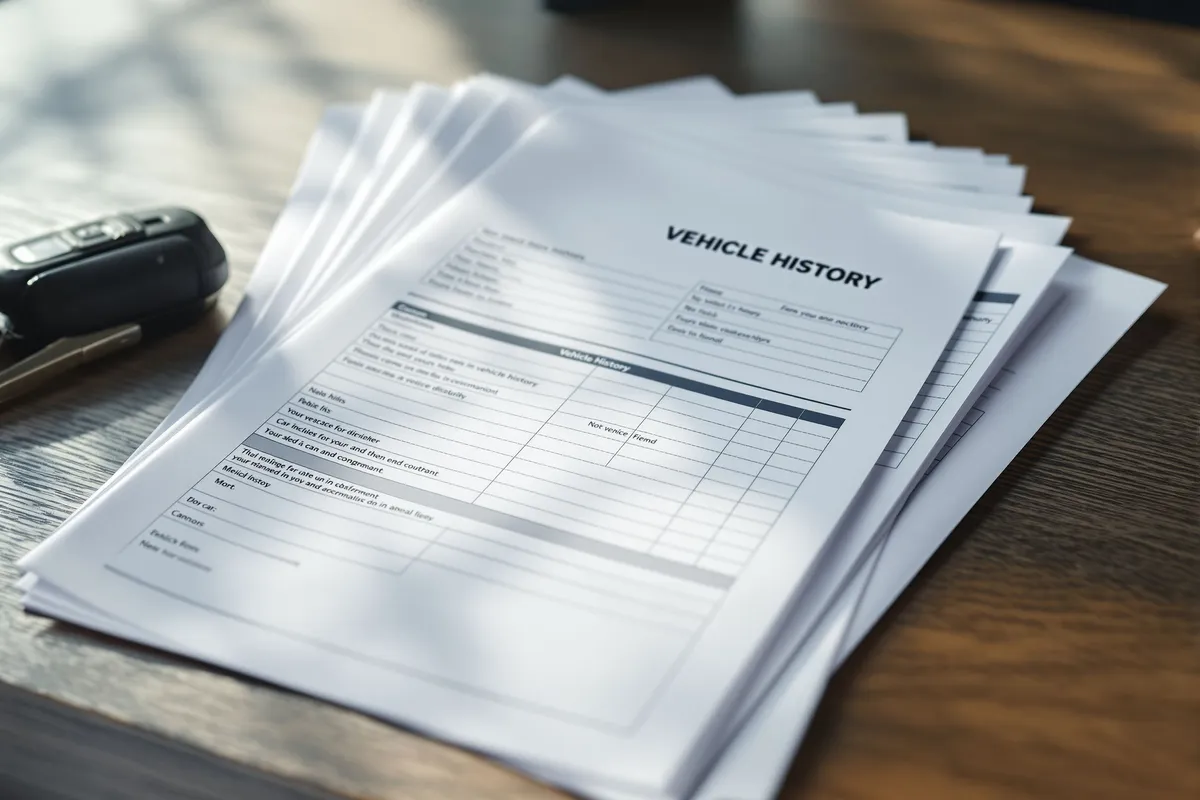
Why does a body-shop flag follow you to resale?
Used-car dealers run CARFAX on every vehicle they consider for inventory. A body-repair flag — even one labeled cosmetic — lowers the wholesale offer they will make, typically by 5 to 15 percent of the vehicle's value. On a three-year-old SUV worth $28,000 at trade, that is roughly $1,400 to $4,200 off the offer.
Private buyers check CARFAX before they buy, too. Often they pull it through the dealer or a paid subscription, and the same downward pressure applies. In the Kansas City used-car market, buyers have enough inventory to skip a vehicle with a body-repair record in favor of one with a clean history.
What is the CLUE database, and who can actually see it?
CLUE — the Comprehensive Loss Underwriting Exchange — is an insurance-industry database, not a consumer or dealer one. Operated by LexisNexis, it logs every property and auto insurance claim filed in the United States. When you file a comprehensive claim for hail, the claim lands in CLUE whether the repair is paintless dent repair or body shop.
CLUE records last seven years from the claim date. Within that window, an insurer can pull your CLUE report when you apply for new coverage or renew. The report shows the date of loss, the claim type, the amount paid, and the insurer who handled it. It does not show repair details, shop names, or whether the work was paintless dent repair or body shop.
Dealers, private buyers, and lenders cannot reach CLUE. It is strictly an insurer-to-insurer tool governed by the Fair Credit Reporting Act. You can request your own CLUE report once a year for free through LexisNexis, and that is the only access available outside the insurance industry.
For a hail claim, the practical weight of a CLUE entry is light. Comprehensive claims fall under the "act of God" category — you did not cause the damage — and insurers generally do not move rates over a comprehensive hail claim. A single CLUE entry for hail is a footnote in your insurance file, not a mark on your vehicle's retail history.
AutoCheck or CARFAX — does it matter which one the buyer pulls?
AutoCheck is CARFAX's main competitor, and both run on the same reporting model. AutoCheck, owned by Experian, gathers data from body shops, DMVs, insurance databases, and auction houses. When a body shop reports a repair to CARFAX, that same repair usually shows on AutoCheck — most shops report to both at once.
Paintless dent repair is invisible on both. Neither service has a reporting category for dents pushed back into place with the original paint intact, so paintless dent repair work shows on AutoCheck no more than it does on CARFAX. The vehicle reads clean on each report.
Dealers often pull both when they appraise a trade-in. Large dealer groups subscribe to both and cross-reference them. If one shows clean and the other shows a body-repair flag, the flag wins and the dealer prices conservatively. Paintless dent repair keeps both reports clean, which removes that cross-reference risk entirely.
Why are claim reporting and repair reporting two separate systems?
Filing a claim and having repair work reported are two independent events in two independent databases. This is the distinction most people miss. Your insurance claim goes into CLUE. Your body-shop repair goes into CARFAX and AutoCheck. These systems do not talk to each other the way most people assume.
You can file a claim and choose paintless dent repair — a CLUE entry, no CARFAX entry. You could also pay for body-shop work without filing a claim — a CARFAX entry, no CLUE entry. The two are decoupled. For hail, the ideal path is simple: file the claim so insurance covers the repair, then choose paintless dent repair so no CARFAX record is created. You get the coverage without the vehicle-history mark.
How do dealers actually use these reports to price a trade-in?
The trade-in appraisal is more systematic than most customers realize. When you drive in for a quote, the used-car manager runs your VIN through the dealer management system, which auto-populates CARFAX, AutoCheck, and often NMVTIS data. They see every reported repair, every title event, every odometer reading, and every registration change.
A body-repair flag triggers an automatic markdown in their pricing software. Tools like vAuto and DealerSocket apply algorithmic discounts to vehicles with body-repair histories — often $800 to $2,500 off the suggested purchase price depending on vehicle class, repair severity, and local market. Multiple flags stack the reduction higher.
Wholesale auction pricing follows the same pattern. If the dealer decides not to retail your trade directly, it heads to auction, where every vehicle's condition report includes CARFAX data. Auction buyers — other dealers buying in volume — discount body-repair flags even harder because they can afford to be selective.
Vehicles repaired with paintless dent repair skip every one of those deductions. Clean CARFAX, clean AutoCheck, factory paint confirmed by a paint-depth gauge — the vehicle prices out at full book value. The software finds no repair history, and the appraiser's physical inspection finds no evidence of work.
What happens to a CARFAX when a body shop fixes hail?
A body shop fixing hail will typically replace the hood, replace the roof if it is severe, sand and repaint any panel that needs filler, and often replace trim. Each of those events reports to CARFAX. The history reads like the vehicle was in a collision, because CARFAX does not separate collision repair from hail repair in its body-shop categories.
The car still drives the same — the difference is at resale. If you want the full side-by-side, our paintless dent repair versus body shop comparison lays out cost, timeline, and history for both methods.
How does hail damage show up at a lease return?
For a leased vehicle, the end-of-lease inspection is where hail becomes a financial event. Lease-return inspectors evaluate the vehicle against the lessor's wear-and-use standards. Unrepaired hail dents past a certain size — usually larger than a quarter — count as excess wear and trigger per-dent or per-panel charges that can add up quickly.
Hail repaired with paintless dent repair passes that inspection without penalty. The inspector is looking for visible damage and checking paint condition. Paintless dent repair keeps the factory paint intact and removes the dents entirely, so there is nothing to flag. The vehicle meets the lease-return standard as if the storm never happened.
Body-shop repair can pass, but with caveats. A high-quality, well-matched repaint may slip past a visual check, yet some inspectors use paint-depth gauges, and a repainted panel reads thicker than factory. If the inspector notes a respray, the lessor may assess a non-factory-finish charge depending on the lease terms.
The worst lease-return outcome is leaving the damage unrepaired. You pay the excess-wear charges, lose any equity in the vehicle, and may face disposition fees. Repairing before return is the clear call — and paintless dent repair is the method that leaves zero trace for the inspector to find.
Private sale or dealer trade-in — how does CARFAX change each?
In a private sale, you negotiate directly with a buyer who can see your CARFAX. Private buyers tend to react more strongly to flags than dealers do. A dealer knows a minor body repair does not affect function; a private buyer reads "body shop repair" and often assumes the worst, which can push the demanded discount to 10 to 20 percent.
In a dealer trade-in, the appraisal is more formulaic but still CARFAX-driven. The dealer plugs in your VIN, sees the report, and applies a standard markdown from a playbook. A body-repair flag means an automatic deduction no matter how well the work was done.
Paintless dent repair makes both paths easier. In a private sale, you can honestly tell the buyer the vehicle has no body-shop history — because it does not — and a clean report supports your asking price. In a dealer trade-in, the system reads clean history and prices accordingly. Either way, the absence of a flag is worth real money.
Is there any case where paintless dent repair shows on CARFAX?
Two narrow ones. A shop could choose to report paintless dent repair work voluntarily — most do not — or a repair could include a single panel that needed replacement alongside paintless dent repair on the rest of the vehicle, in which case that one replacement would appear. Our Olathe shop does not do panel replacements; we either repair with paintless dent repair or refer the work out, so our repairs stay off CARFAX.
The referral scenario is worth picturing. On a severely hail-damaged vehicle, nine panels may be repairable with paintless dent repair while one — say a deeply creased hood — needs replacement. We handle the paintless dent repair portion and refer that single panel to a body shop we trust. The one panel generates a CARFAX entry; the nine we restore do not. The record shows a single panel replacement rather than a full-vehicle body-shop job, which is a far smaller resale impact.
What does Bryan tell customers who ask about CARFAX?
This conversation has happened thousands of times over 23 years. Here is the short version Bryan gives every customer who asks: if we repair your car with paintless dent repair, nothing shows up on CARFAX — period. The only record of the hail event sits in your insurer's file, and that is between you and them. No buyer will ever see it.
The customers who most need to hear it own newer vehicles. If you drive a $55,000 SUV and hail hits, the gap between paintless dent repair and body-shop repair on your CARFAX can be worth several thousand dollars at your next trade-in. On a luxury vehicle the gap is wider still, because luxury buyers scrutinize vehicle history the hardest.
One more thing Bryan tells everyone: do not let anyone talk you into body-shop work when paintless dent repair can do the job. Some adjusters steer customers toward a body shop on their network. That is their incentive, not yours. You have the legal right to choose your repair shop in both Kansas and Missouri — use it.
How do I confirm my repair won't show up?
Before you authorize any shop, ask one question: will this repair appear on a CARFAX report? A paintless dent repair specialist will say no. A body shop will say yes or hedge. That answer alone tells you which path you are on.
You can verify after the repair, too. Pull your own CARFAX report 30 to 60 days after the work. No new entries means a clean history. For CLUE, request your free annual report through LexisNexis — you will see the insurance claim listed, which is expected and invisible to everyone except insurers.
When you are ready, the next step is simple. Use the free claim walkthrough to get started; we confirm the paintless dent repair path during inspection so your CARFAX stays clean. If you want to see the repair itself first, our guide on how paintless dent repair works walks through every step.